Over the years, I’ve worked with founders, executives, and institutional leaders who all share something in common: strong ideas backed by real commitment.
The vision is compelling. The mission is clear. Often, the capital is even lined up.
And yet, again and again – I’ve watched promising initiatives stall, slow, or quietly unravel.
Not because the idea was wrong. Not because the people weren’t capable. But because execution readiness was assumed rather than designed.
The Hidden Gap Between Vision and Reality
Most organizations underestimate how early execution risk shows up.
We tend to think failure happens later—during scale, procurement, hiring, or growth. In reality, the most consequential risks appear much earlier, at the moment an idea begins its transition from concept to operating reality.
That transition – the shift from idea to institution – requires a fundamentally different set of muscles.
Launching something is not the same as sustaining it. Advocating for an idea is not the same as governing it. Raising capital is not the same as deploying it effectively.
This is where many well-intentioned initiatives falter.
Execution Is a Design Problem
When execution fails, it’s often framed as a motivation issue, a leadership gap, or a resourcing challenge. But more often than not, execution struggles are design problems.
They stem from unclear answers to a few core questions:
Who actually owns decisions?
How accountability is defined and enforced
Whether the operating model matches the ambition of the idea
Without clarity in these areas, even the strongest strategies become fragile.
The Three Fault Lines That Matter Most
In my work, execution risk consistently concentrates in three places:
1. Governance & Accountability Governance is not about bureaucracy—it’s about clarity. When roles, escalation paths, and decision authority are ambiguous, progress slows and conflict increases. Good governance enables movement; poor governance creates paralysis.
2. Decision Rights & Ownership Ideas don’t move forward unless someone owns the next critical decision. Shared ownership often becomes no ownership. When decision rights aren’t explicit, momentum depends on personalities rather than systems.
3. Operating Model Design An operating model is the practical expression of strategy. It answers how work gets done, by whom, and with what resources. When the operating model lags behind ambition, execution breaks under real-world conditions.
From Idea to Institution
I’ve come to think of this transition as the most underestimated phase of organizational life.
Turning an idea into an institution requires planning not just for growth, but for durability. It requires designing systems that can function even when the original champions step back, funding fluctuates, or external conditions change.
That means asking harder questions earlier.
The Six Questions I Return To
When I’m assessing whether an initiative is truly ready to execute, I often return to a short diagnostic set:
Who owns the next critical decision?
What has to exist for this to run without you?
Where does this break at the next level of scale?
How will you know in 90 days if this is working?
What capability must be built that doesn’t exist today?
What is the first real-world bottleneck?
These questions don’t require perfect answers – but they do require honest ones.
They surface assumptions that often go unspoken. They reveal where optimism is doing the work of structure. And they help leaders distinguish between what is possible and what is deployable.
Why This Matters Now
This conversation is increasingly urgent.
Capital is tighter. Expectations around outcomes are higher. Institutions—public, private, and philanthropic—are being asked to deliver measurable results in more complex environments than ever before.
In this context, execution readiness is no longer a “nice to have.” It is the difference between momentum and stagnation, between pilots and platforms, between ideas that inspire and institutions that endure.
A Practical Application
These themes are at the heart of an Action Lab I’ll be facilitating in the coming days, where founders, funders, and institutional leaders will pressure-test real initiatives as they move from concept to deployment.
The goal isn’t to generate new ideas. It’s to assess whether existing ones are structured to survive reality.
The Red Hills Perspective
At Red Hills Consulting Group, this is the work we do every day – helping organizations translate vision into execution by designing the governance, decision structures, and operating models that make results durable.
Because ideas don’t fail for lack of vision. They fail when ownership, governance, and operating reality are left undefined.
And the earlier those gaps are addressed, the stronger the institution becomes.
About Renée Renée Jones is the Founder and CEO at Red Hills Consulting Group, where she leads strategic, operational, and transformational initiatives for Fortune 500 companies, nonprofits, and mission-driven organizations. With more than 20 years of experience leading complex initiatives, Renée helps organizations turn bold ideas into lasting impact. Outside of work, she mentors emerging leaders and champions social-impact innovation.
Why execution discipline, change leadership, and operational rigor matter more than ever for mission-driven organizations.
As the new year begins, I’ve been reflecting on a pattern I continue to see across the organizations I work with—both in the private sector and in mission-driven nonprofits.
Before founding Red Hills Consulting Group, I spent years inside large, global organizations supporting and leading enterprise-wide transformation efforts. These were environments where change wasn’t theoretical or optional. It was complex, highly visible, and expected to deliver measurable results—often across regions, functions, and cultures.
Today, as I partner more deeply with nonprofits, foundations, and social-impact organizations, I see extraordinary commitment to mission and community. What I also see—far too often—is a gap between ambition and execution.
This isn’t a critique. It’s an observation grounded in lived experience on both sides.
The nonprofit sector does not need to become more corporate. But it does need to be more disciplined about execution, change leadership, and follow-through—especially as expectations for impact, accountability, and scale continue to rise.
Impact at scale requires more than heart. It requires systems that work.
What Actually Transfers From the Private Sector
Execution Is a Capability, Not a Phase
In corporate environments, strategy doesn’t end with a plan or a deck. That’s where the real work begins.
Across enterprise-wide transformations, I’ve supported organizations in different ways—first as a management consultant at Deloitte, PwC, and Capgemini, and later in corporate leadership and embedded advisory roles within global companies including Johnson & Johnson, Revlon, Publicis Groupe, and Pfizer. In each context, execution discipline was treated as a core organizational capability.
That discipline shows up as:
Clear ownership and decision rights
Realistic sequencing and resourcing
Milestones tied to outcomes—not activity
In many nonprofits, strategy is treated as the finish line rather than the starting point. The result is familiar: strong plans that quietly stall under the weight of day-to-day operations.
A strategy without execution infrastructure is just aspiration.
Change Management Is Strategic, Not “Soft”
In the private sector, change management was never an afterthought. It was a funded, staffed workstream with clear accountability.
That experience taught me something I carry into every nonprofit engagement:
Resistance isn’t dysfunction. It’s data.
Yet in many mission-driven organizations, change is still underestimated:
Communications are reactive
Stakeholder engagement is compressed
Adoption is assumed rather than designed
When teams are fatigued or skeptical, leaders are often surprised—despite having asked people to absorb multiple shifts without the time, clarity, or support to do so well.
Change doesn’t fail because people are difficult. It fails because leaders don’t invest in helping people cross the bridge from old ways of working to new ones.
Data Discipline Protects the Mission
Corporate environments taught me how to use data without losing the human center.
Not vanity metrics. Not dashboards for their own sake. But:
Leading indicators that surface risk early
Measures tied directly to strategic priorities
The discipline to course-correct in real time
In nonprofits, data discipline isn’t about corporatization. It’s about stewardship. When resources are scarce and the stakes are high, clarity matters.
Rigor doesn’t replace values. It protects them.
Where AI Is Raising the Stakes
This gap between ambition and execution has become even more visible as nonprofits rush to explore AI and other digital tools.
AI doesn’t fix broken processes, unclear ownership, or change fatigue. It amplifies them.
Organizations without strong operational foundations don’t become more effective with AI—they become more overwhelmed. Tools move faster than people can adapt, and leadership struggles to keep pace.
The nonprofits most likely to benefit from AI are not the most tech-forward. They are the most operationally prepared.
AI, like any enterprise-wide transformation lever, raises the bar for execution discipline. It rewards clarity and exposes gaps.
What Nonprofits Should Be Careful Not to Borrow
Over-Engineered Frameworks
Some corporate tools are designed for scale, compliance, and uniformity—not agility.
Nonprofits don’t need bloated governance models or overly complex processes. They need fit-for-purpose systems that reflect their size, culture, and mission.
The lesson isn’t to copy templates. It’s to apply principles.
Top-Down, People-Blind Transformation
Command-and-control approaches may move quickly in some corporate environments. They rarely work in mission-driven ones.
Nonprofits rely on trust, community, and shared purpose. Ignoring staff voice or community context in the name of speed undermines the very outcomes leaders are trying to achieve.
Faster isn’t better if it fractures trust.
The Cost of Ignoring Enterprise-Scale Experience
Here’s the pattern I see repeatedly when execution expertise is deprioritized:
Strategy refreshes every 18–24 months
Initiatives that never fully land
Burned-out teams carrying invisible operational load
Boards frustrated by “lack of progress” without clarity on why
When organizations avoid hiring or partnering with leaders who have managed complexity at scale, inefficiency becomes normalized—and impact quietly plateaus.
This isn’t about pedigree. It’s about pattern recognition.
Enterprise-wide transformation teaches you how systems break, how people respond to change, and where execution most often fails. Those lessons are deeply transferable—when translated thoughtfully.
The Hybrid Leader Nonprofits Actually Need
I don’t bring corporate thinking into nonprofits.
I translate what works—and intentionally leave the rest behind.
That hybrid approach draws on:
Corporate execution rigor
Nonprofit empathy and mission alignment
Global and cross-sector perspective
Deep change-leadership experience
It’s not either/or. It’s discernment.
The nonprofits that will thrive in the coming decade won’t reject corporate approaches wholesale—or adopt them blindly. They’ll invest in leaders and partners who know how to bridge strategy and execution, values and systems, ambition and reality.
Because impact at scale requires more than heart.
It requires systems that work.
About Renée Renée Jones is the Founder and CEO at Red Hills Consulting Group, where she leads strategic, operational, and transformational initiatives for Fortune 500 companies, nonprofits, and mission-driven organizations. With more than 20 years of experience leading complex initiatives, Renée helps organizations turn bold ideas into lasting impact. Outside of work, she mentors emerging leaders and champions social-impact innovation.
Growth starts inside. Too many leaders overlook this truth—and it’s costing them.
Lately, I’ve been asking myself a hard question: why do so many organizations hesitate to invest in the very services that could help them grow and thrive?
As the Founder of Red Hills Consulting Group, I’ve seen leaders nod along when we talk about operational excellence, strategy alignment, and transformation—but too often, those conversations stall before they turn into action. It’s not because the ideas lack merit. More often, it’s because leaders don’t fully see the value—or feel unable to prioritize it.
So what’s really going on?
The Challenge Behind the Hesitation
Funding realities. Mission-driven organizations and nonprofits, in particular, are facing difficult headwinds. Federal budgets are being cut, philanthropy is shifting, and donor fatigue is real. Every dollar feels stretched, and investments in operations or change management often take a back seat to program delivery.
Short-term vs long-term tension. Leaders are under pressure to show immediate results. External wins—new programs launched, partnerships announced, fundraising milestones—often get prioritized over internal strengthening. It’s understandable, but it comes at a cost.
Perception gap. Too many leaders still see operational excellence, streamlined processes, or change management as “nice to have” initiatives rather than the very foundation of growth and sustainability. They underestimate the silent drag of inefficiency, misalignment, and poor communication.
Change fatigue. After years of disruption—the pandemic, workforce churn, political uncertainty, and DEI rollbacks—many organizations are exhausted by the idea of “more change.” Even when they know improvements are needed, leaders may avoid starting because the lift feels heavy.
The Missed Opportunity
What’s often overlooked is that broken systems, unclear processes, and siloed teams quietly bleed organizations of time, money, and morale.
Every week wasted in inefficient meetings, every dollar lost to duplication, every hour spent reinventing the wheel instead of advancing the mission is a cost. And it’s a cost that compounds.
You can’t deliver on your mission externally if your house is crumbling internally. Long-term growth and impact demand a strong foundation. The external wins that boards, donors, or shareholders want to see start with fixing what’s beneath the surface.
The Red Hills Approach
At Red Hills Consulting Group, we help organizations move from vision to value. That means more than solving problems—it means creating capacity, clarity, and measurable impact.
We do this by:
Clarifying Direction Helping leaders define a vision and roadmap so priorities are aligned.
Aligning People + Processes Building structures, culture, and operations that support transformation and scale.
Optimizing Performance Driving efficiency, transparency, and accountability with proven methodologies.
Navigating Change Guiding adoption and engagement so transformation sticks.
Amplifying Social Impact Strengthening nonprofit and CSR strategies so organizations deliver measurable change.
This is not about adding complexity. It’s about reducing noise, removing barriers, and unlocking the capacity organizations already have to achieve their boldest goals.
A Question for Leaders
So here’s the question I’d invite leaders to reflect on:
👉 What would it mean for your organization if you invested in fixing the internal challenges that slow you down?
Would your teams have more capacity to innovate? Would your stakeholders trust you more? Would you finally see the external growth you’ve been chasing?
The organizations that recognize operational excellence as a growth accelerator—not an expense—are the ones that will not just survive in this climate, but thrive.
Closing
At Red Hills, this is the work we love most: guiding organizations through the transformation that allows them to scale impact, amplify purpose, and build sustainable growth.
The value is there—sometimes it just takes a mindset shift to see it.
If your organization is ready to explore that shift, we are here to help.
About Renée Renée Jones is the Founder and Principal Consultant at Red Hills Consulting Group, where she leads strategic, operational, and transformational initiatives for Fortune 500 companies, nonprofits, and mission-driven organizations. With more than 20 years of experience leading complex initiatives, Renée helps organizations turn bold ideas into lasting impact. Outside of work, she mentors emerging leaders and champions social-impact innovation.
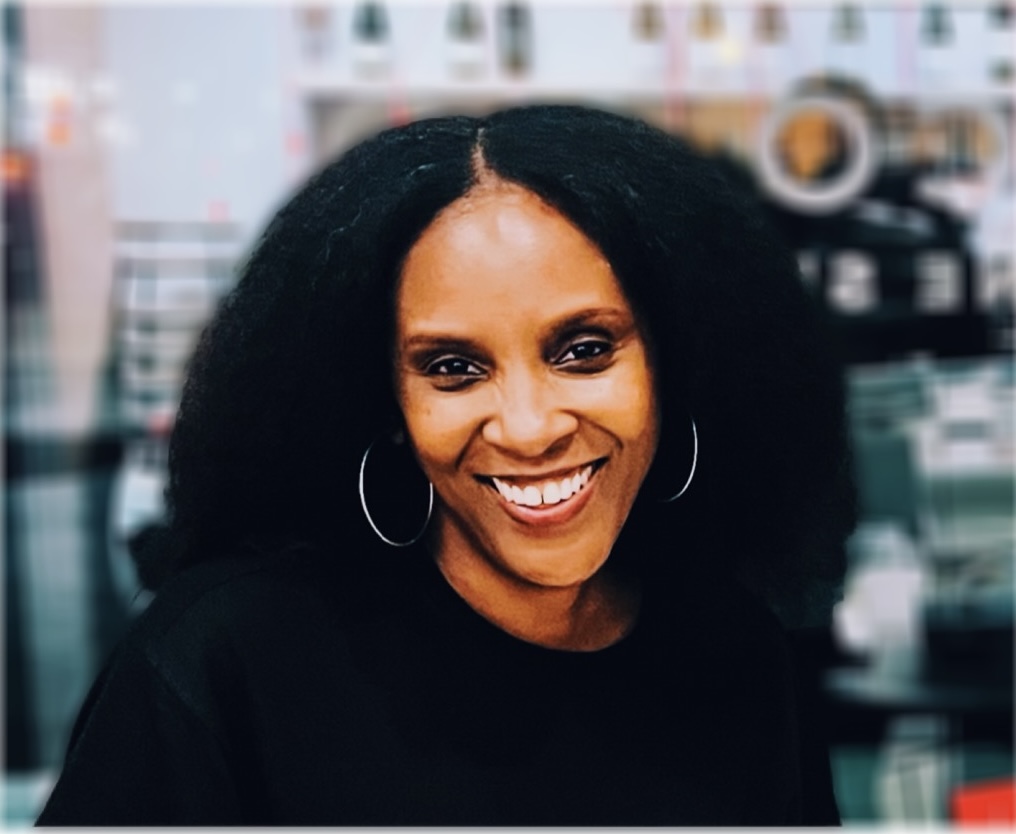
Renée Jones, Founder of Red Hills Consulting Group
In a high-rise conference room, I realized that despite my seat at the table, my voice still felt unheard. That moment changed the trajectory of my career…
My career has taken me from Fortune 50 boardrooms to supporting grassroots nonprofits in rural East Africa. Along the way, I’ve navigated corporate cultures, led high-stakes transformation projects, and built a consulting practice grounded in equity, purpose, and measurable impact. This is the story of how lived experience — as a Black woman in predominantly white spaces, as a strategist, and as a changemaker — shaped my vision for Red Hills Consulting Group.
Early Foundations
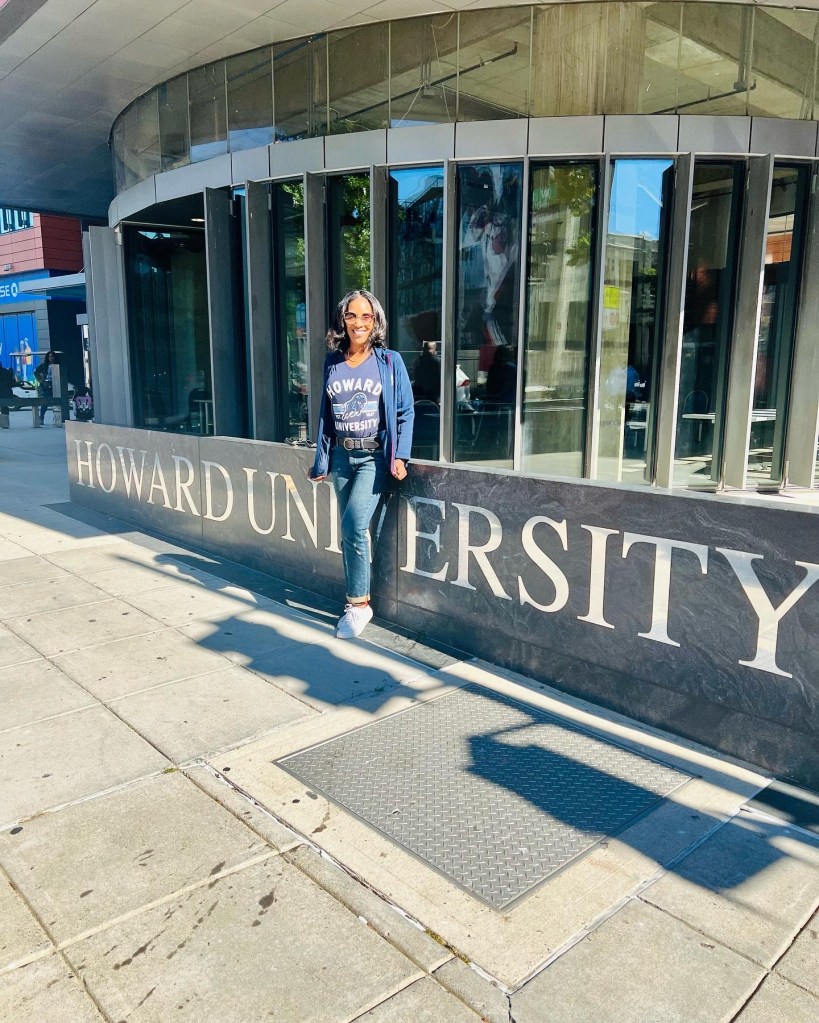
Where my foundation in business — and purpose — began. From Howard University’s campus to Fortune 50 leadership roles, the journey started here.
At Howard University, I pursued a degree in Accounting because it seemed like the practical thing to do. In my Caribbean family, business degrees were a respected path — stable, honorable, and certain to lead to employment right out of school. As the daughter of Jamaican immigrants, I wanted to make my family proud and follow a path that was proven.
I envisioned myself earning a CPA and joining an accounting firm for a long, steady career. But the reality was different — while I gained valuable, hands-on experience at an accounting firm, I quickly realized I didn’t love the work. I wasn’t energized by the exam prep or the prospect of spending my career focused solely on accounting details. My heart was elsewhere, even if I didn’t yet know where “elsewhere” was.
Shifting Toward Strategy
So, I pivoted — moving into other roles in accounting and finance before deciding to return to school for my MBA. That decision changed everything. It opened doors to financial planning and analysis roles, where I could connect numbers to strategy and make decisions that moved the business forward.
One of the most pivotal career moments came at the National Black MBA Association conference, where I was recruited by Johnson & Johnson through their MBA diversity hiring program. The opportunity required me to relocate from Maryland to New Jersey — a leap that brought me into the world of a Fortune 50 company. At J&J, I took on a Senior Financial Analyst role in Marketing Finance, supporting the company’s largest pharmaceutical operating company — a $7.7B business. My work spanned strategic planning, forecasting, and business case development, including financial analysis for the anticipated launch of a product projected to reach $650M in peak sales. Beyond sharpening my finance expertise, I learned to navigate the complexities of a large, global organization. More importantly, I saw firsthand how numbers could drive business strategy and market impact — a turning point in how I approached my career. That experience not only broadened my professional horizons but also affirmed that being intentional about opportunities could lead to game-changing outcomes.
Navigating Corporate Consulting
Bringing clarity to complex challenges through innovation and insight. Like fitting the right puzzle piece, transformation requires precision and vision.
But as I climbed the corporate ladder, I also faced challenges that many Black women in predominantly white corporate spaces know well — the lack of mentors and sponsors, being passed over for promotions despite stronger qualifications, and navigating microaggressions while maintaining professionalism.
That became even more evident when I entered the world of management consulting, where success required not just expertise, but also access to the right networks and unspoken circles. As a Black woman, breaking into those spaces took more than skill — it demanded persistence, adaptability, and strategic relationship-building.
It was this blend of technical expertise and intentional relationship-building that defined some of my most meaningful consulting engagements — including one that stands out vividly.
One engagement that crystallized my consulting philosophy was a rapid, three-week turnaround for a global luxury brand’s Finance function. Inefficiencies were slowing decisions and obscuring performance insights, and time was critical. In less than a month, I worked closely with leaders to uncover the root causes, cut through bottlenecks, and deliver targeted recommendations that could be put into action immediately. The result: leaner processes, sharper reporting, and a shift toward best practices — all without disrupting daily operations. It reinforced a core belief I carry into every project: the right insights, at the right moment, can spark transformation without delay.
I worked primarily across Strategy & Operations, Transformation, and the CFO Advisory practice. I learned from brilliant minds and global organizations, traveled extensively, and built a consulting skill set that would serve me for the rest of my career. The perks were real — the airline miles, the hotel points — but so were the pressures. The culture could be competitive and, at times, isolating. Eventually, I began to feel something was missing: I needed more purpose, more meaning, more passion in my work.
A Seed Is Planted
Planting seeds for growth — in organizations and communities. Change takes root when the right conditions — and the right partners — are in place.
That search for meaning led me to volunteer with Taproot Foundation more than a decade ago. I was inspired by their mission to connect skilled professionals with nonprofits and small businesses, helping them solve complex challenges. It was my first taste of applying my expertise in a purely mission-driven way — and it planted a seed that would shape the future of my career.
The Leap to Independence
A few years later, after the long hours, constant travel, and limited promotional opportunities had taken their toll. I was ready for a change — and the timing was right. I was tapped by an organization that deploys on-demand talent for their most important client projects. The role offered the chance to work independently while applying everything I’d learned at major companies. It was the right opportunity at the right moment, and I felt prepared for it.
That’s when I created Red Hills Consulting Group — initially as a business entity for independent engagements — and began leading and supporting enterprise-wide business transformation programs across Fortune 500 companies and nonprofits. I named it Red Hills Consulting Group — inspired by my Jamaican roots and my vision of blending strategic clarity, operational excellence, and social impact. At the time, I saw it as a business vehicle, not yet a calling.
Around this time, I also earned my Project Management Professional (PMP) certification — a deliberate step to deepen my expertise, strengthen client confidence, and ensure my practice met the highest standards of delivery.
Aligning Work with Values
Shifting from corporate success to mission-driven impact — aligning strategy with values to create lasting change.
I continued to build my resume in corporate and consulting roles. However, when a major client unexpectedly ended my contract despite strong performance and awards, it reinforced the importance of keeping my consulting practice active. I quickly secured new engagements, but I also recognized that I wanted my work to be better aligned with my values.
That realization became undeniable after a senior leadership role at a large multinational corporation brought more of the same challenges I had seen before. When that role ended, it was difficult in the moment — but ultimately one of the best things that could have happened to me.
I took time to reset, reflect, and get intentional. I knew I wanted to work with mission-driven organizations committed to social impact, corporate social responsibility, and advancing equity, access, and opportunity. I wanted my work to empower women, people of color, and communities that had been overlooked. And I wanted to build something on my own terms.
Turning Point: Mission-Driven Focus
Empowering the next generation through access to education. At Tanzania Development Support, strategy meets life-changing results.
Across my career — from Fortune 500 companies to philanthropic organizations — I’ve helped leaders drive transformation, operational excellence, and measurable results. Yet, even as I thrived in corporate and cross-sector work, something was still missing — a deeper sense of purpose.
That shift came into focus after a transformational journey to Tanzania and Zanzibar Island — an experience that broadened my worldview and brought clarity to my purpose. The timing was serendipitous: soon after returning, I had the opportunity to support Tanzania Development Support (TDS) through another Taproot service grant, helping to craft a fundraising strategy that would fuel their mission. In 2023, I joined the TDS Board of Directors, where I now lead the Evaluation Committee, assessing and measuring progress toward expanding educational access in rural East Africa. Doing this work — seeing the direct link between strategy, resources, and life-changing outcomes — has been transformative. It confirmed that mission-driven consulting isn’t just my passion; it’s where I can create the most meaningful impact.
The Red Hills Vision
Connecting vision to execution, and people to possibilities. The bridges we build today will carry the next generation forward.
That’s when Red Hills Consulting Group moved from the background to the forefront. I shifted my energy toward growing the firm, while still applying for selective roles that aligned with my mission. In June 2025, I launched the Red Hills website — a visible commitment to this next chapter.
Today, Red Hills partners with mission-driven nonprofits, philanthropic organizations, and forward-thinking corporations. Our work bridges the gap between vision and execution — helping organizations achieve operational excellence without losing sight of their values.
The real fulfillment for me now comes in building bridges:
Equipping nonprofits to scale their programs without losing their soul
Guiding corporate teams to embed equity into transformation efforts
Creating partnerships that connect resources to the communities that need them most
Looking ahead, my vision is clear: to grow Red Hills into a trusted ally for organizations doing the hard, necessary work of creating a more equitable world. My journey has taught me that breaking barriers is only part of the work — the real fulfillment comes in building bridges strong enough for many to cross, sturdy enough to last. Bridges for the next leader, the next woman of color, the next mission-driven organization, so they can go even further.
How has your lived experience shaped your career path?
About Renée Renée Jones is the Founder and Principal Consultant at Red Hills Consulting Group, where she leads strategic, operational, and transformational initiatives for Fortune 500 companies, nonprofits, and mission-driven organizations. With more than 20 years of experience leading complex initiatives, Renée helps organizations turn bold ideas into lasting impact. Outside of work, she mentors emerging leaders and champions social-impact innovation.
In today’s disruption-prone world, the word transformation is everywhere. Organizations stand up “Transformation Offices,” appoint Chief Transformation Officers, and launch sweeping change initiatives backed by sleek dashboards and hefty budgets.
But if there’s one thing I’ve learned after leading complex transformation programs across Fortune 500s, nonprofits, and private equity-backed companies, it’s this:
Transformation isn’t a department. It’s a culture shift.
Beyond the Org Chart
Years ago, I supported a global beauty brand in a multi-year transformation initiative. We had the structure in place—program leads, governance teams, and detailed roadmaps. On paper, it looked like a textbook rollout.
But we quickly realized the deeper challenge: the culture hadn’t caught up to the vision.
Employees were still clinging to outdated ways of working. Middle managers quietly resisted new roles. Cross-functional collaboration was more talk than action. The transformation looked good on the org chart—but in the day-to-day rhythm of the business, it had not taken root.
That experience (and many since) cemented this truth: if you don’t shift the culture, you’re just reshuffling boxes.
Mindset Over Mechanics
Too often, transformation efforts lean heavily on the mechanical side—new technologies, reorganized teams, redesigned workflows. These are necessary, but not sufficient.
What’s harder—but far more impactful—is shifting how people think, behave, and engage.
When I worked with a major life sciences client to redesign their global PMO, our biggest wins didn’t come from the processes we implemented—but from the mindset we nurtured. We created safe space for functional leads to challenge old assumptions, encouraged transparency in reporting, and celebrated progress—even when it was messy. Over time, the PMO became not just a compliance engine, but a trusted partner in strategic execution.
What Transformation Really Requires
Here’s what I’ve seen work across sectors:
🔹 Start with Purpose I always begin with the “why.” When teams understand how the change aligns with their values or mission, resistance melts. At one nonprofit client, we framed a difficult org redesign around impact—what it would allow them to achieve for their beneficiaries. That alignment changed everything.
🔹 Model the Change Transformation takes hold when leaders walk the talk. In my work leading enterprise-wide change, I’ve partnered with executive teams to shift from command-and-control dynamics toward more collaborative, inquiry-driven leadership—where listening, humility, and curiosity drive better outcomes. Culture change always starts at the top.
🔹 Create Psychological Safety In a recent diagnostic for a multinational client, we uncovered that fear of failure was silently killing innovation. We worked to reframe “failure” as learning—introducing pilots, retrospectives, and peer coaching. When people feel safe, they grow.
A Living, Breathing Shift
Transformation isn’t something you launch and leave behind. It’s a living process—rooted in behaviors, sustained by belief systems, and reflected in how your people show up every day.
So if you’re leading change—ask yourself: are you designing systems, or shifting culture?
Because long after the project plans are archived, culture is what carries the transformation forward.
About Renée Renée Jones is the Founder and Principal Consultant at Red Hills Consulting Group, where she leads strategic, operational, and transformational initiatives for Fortune 500 companies, nonprofits, and mission-driven organizations. With a focus on clarity, collaboration, and measurable impact, she helps organizations turn bold vision into real-world results. www.redhillsconsultinggroup.com
A behind-the-scenes look at my consulting approach—and why it works.
When organizations bring me in, they’re often standing at the edge of something big: a new strategic plan, a transformation initiative, or a change they know is necessary—but haven’t quite figured out how to execute.
They don’t need more theory. They need a trusted partner who can bring structure to the chaos, ask the hard questions, and guide teams from talk to traction.
That’s what I do at Red Hills Consulting Group.
Whether it’s a nonprofit trying to scale impact, a PE-backed company improving operational efficiency, or a corporate team realigning after reorg—I help organizations move from vision to value. Here’s how.
🧭 1. Clarify the Vision
Every engagement starts with understanding your “why.” What does success look like in 12 months? What challenges are in your blind spots? What are we solving for—and for whom?
I help leadership teams align around shared goals and surface the hidden friction points. This clarity becomes our North Star for everything that follows.
🔍 2. Diagnose the Gaps
This is the step most organizations skip—and the one that changes everything.
I bring a diagnostic mindset to every engagement. That might look like interviewing key stakeholders, auditing business processes, or assessing current-state tools and performance indicators. The goal: get a fact-based picture of what’s working, what’s not, and where we need to focus.
When I led a margin optimization project for an advisory firm, for example, it wasn’t just about cost savings—it was about understanding how work was prioritized, where teams were stuck, and how decisions were made.
🗺️ 3. Co-Design the Path Forward
I don’t drop in with a generic playbook.
Instead, I co-create solutions with your internal teams—whether we’re building a project governance framework, standing up a Strategic PMO, or designing an operational roadmap. That shared ownership ensures the plan isn’t just right—it’s real, and it sticks.
⚙️ 4. Activate with Precision
Ideas are only as strong as the systems behind them.
I bring disciplined execution to the table:
PMO tools and dashboards to manage progress
Clear roles, responsibilities, and routines
Change management to engage teams and manage resistance
Whether I’m guiding a global brand through a product portfolio transformation or advising a nonprofit board on strategic direction, execution is where we turn insights into momentum.
📈 5. Measure What Matters
From efficiency gains and ROI to board alignment and stakeholder trust—we define what success looks like early and track it consistently.
I work with clients to identify the metrics that matter most to their mission, their investors, and their teams—and we build a feedback loop to sustain progress.
From Strategy to Impact: What You Can Expect
Across every sector I serve—nonprofit, healthcare, education, consumer goods—clients come to me for structure, clarity, and results. They stay because I deliver.
I don’t just help you build the plan. I help you deliver it—with confidence, integrity, and measurable impact.
Let’s Move Your Vision Forward
If you’re at an inflection point and ready to turn strategic vision into reality, Red Hills Consulting Group is here to help.
About Renée Renée Jones is the Founder and Principal Consultant at Red Hills Consulting Group, where she leads strategic, operational, and transformational initiatives for Fortune 500 companies, nonprofits, and mission-driven organizations. With more than 20 years of experience leading complex initiatives, Renée helps organizations turn bold ideas into lasting impact. Outside of work, she mentors emerging leaders and champions social-impact innovation. https://redhillsconsultinggroup.com










 Red Hills - Helping Leaders Align Strategy, People, and Purpose to Create Lasting Impact