

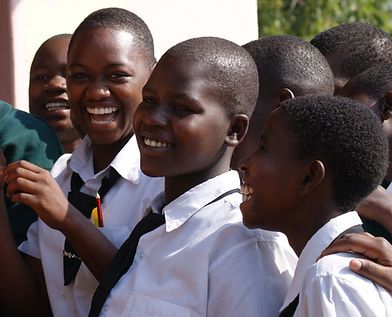
I’ve been sitting with some data that genuinely moved me.
As a board member and chair of the evaluation committee at Tanzania Development Support (TDS), I recently reviewed the latest academic results for our Rose Willmann Scholarship Program. The numbers are extraordinary. But before I share them, I want to tell you something about what they actually mean. Because behind every data point is a girl who was handed something rare and precious: the simple freedom to focus on her studies.
That is what this scholarship does. And it turns out, when you give a girl that freedom, she soars.
“Angalia Kilicho Muhimu”
This is a Swahili expression that translates to “look at what is important.” It is a phrase that guides our work at TDS, and it is the right place to start any story about what we do in the rural Mara region of Tanzania.
Tanzania Development Support is a small but mighty nonprofit organization based in DeKalb, Illinois, with deep roots and deep partnerships in the Musoma-Mara region of Tanzania. Our mission is straightforward: to invest in sustainable, community-identified educational improvements for youth, especially girls, in one of the most underserved regions of the country.
We do this through three interconnected programs. The Madaraka Nyerere Library and Community Resource Center (LCRC) is home to more than 40,000 books, including the largest collection of Kiswahili-language books in any community library in Tanzania, and serves as the heart of our educational ecosystem. The 4H Career Pathways Program engages over 600 students each year in hands-on learning, school gardens, entrepreneurship, and life skills development. And the Rose Willmann Scholarship Program sends gifted girls from economically disadvantaged families to secondary boarding school, changing the trajectory of their lives.
All three programs are connected. All three are guided by the belief that education is not charity. It is investment. And it compounds.
A Place to Grow and Thrive
In rural Tanzania, the path to secondary school for a girl is rarely simple. Without a scholarship, most girls from economically disadvantaged families face an unforgiving set of obstacles: schools with few resources, domestic responsibilities that compete with study time, and in some cases, long and dangerous walks to school each day. Boarding school changes the equation entirely. It provides safety, stability, time, and an environment designed for learning.
The Rose Willmann Scholarship covers all four years of secondary school for just $900 per year per student. That includes tuition, room and board, feminine hygiene products, school supplies, and membership to the LCRC library and computer lab. Sponsors commit to funding a girl’s entire secondary education, ensuring she doesn’t lose her place mid-journey. Since the program launched in January 2019, 69 girls have been Willmann Scholarship recipients, with 40 currently enrolled.
The selection process is rigorous and community-rooted. Head teachers from primary schools across the Musoma Rural District identify candidates based on academics, discipline, motivation, and financial need. LCRC staff conduct screening exams and interviews, assessing not just knowledge but confidence, self-efficacy, and future aspirations. Joyce Masso, our remarkable LCRC Director, meets with each girl’s family personally to explain expectations, validate need, and match the student to a school. There are always more qualified girls than scholarships. That reality is both heartbreaking and clarifying: it tells us the need is real, and the program is reaching the right young women.
The Numbers That Stopped Me
This year, the TDS Evaluation Committee completed a comprehensive analysis of national examination results for scholarship recipients across two partner schools, Nyegina Secondary School and ACT Bunda Girls Secondary School, covering 2024 and 2025 with historical context going back to 2018.
Tanzania’s national examinations are administered by the National Examination Council (NECTA) and are the primary measure of secondary school achievement. Students are ranked in Divisions I through IV, with Division I representing the highest level of performance.
Here is what we found.
At ACT Bunda Girls Secondary School, our scholarship recipients achieved 100% Division I results on the 2025 Form Two national examinations. The school’s overall Division I rate that year was 23%. Our girls outperformed the broader school population by 77 percentage points.
At Nyegina Secondary School, scholarship recipients sitting the 2025 Form Four examinations, the culminating O-Level national exam, achieved 100% Division I. The school-wide rate was 60%. Every one of those young women is now on track for Form Five or college placement.
This is not a single good year. It is a pattern.
Across every year tracked from 2018 through 2025 and across both schools, scholarship recipients have consistently outperformed the general student population at the Division I level. In 2023, all 12 Nyegina scholarship recipients who sat Form Two achieved Division I, a 100% result compared to 52% school-wide. In 2024, 100% of our Form Four graduates at Nyegina were selected for Form Five or college placement.
The hypothesis at the heart of this program, that removing financial hardship from a girl’s path will allow her to excel academically, is supported year after year by the data.
What the Girls Say
Data tells one kind of story. The girls’ own words tell another.
The scholarship recipients are encouraged to write to their sponsors, and their letters, sometimes arriving slowly given the internet connectivity challenges in rural Mara, are quietly extraordinary.
“I have peace because I am not walking many miles every day to go to school. I am in boarding and I have enough time to study and learn many things from teachers and my fellow students.”
“If you would not be you, I would never reach here I am.”
“Because of your support, I learnt many things which helped me, not only about studies but also about life skills. How to manage time, how to prepare my future, how to live with others.”
“I like to share with you about my future dream, which is to be a nurse.”
These are not abstract beneficiaries of a program. They are young women with ambitions, with voices, with futures that are opening in real time. One wants to be a nurse. One wants to be an engineer. One is teaching her government-school friends how to use a computer because her boarding school has one and theirs does not. She writes: “My parents also they see changes to me.”
That last sentence is worth sitting with. Because when a girl’s parents see changes, when a community begins to see the value of educating their daughters, something larger than one scholarship has shifted. The Bukwaya community, a collection of villages in the Mara region, is increasingly recognizing the importance of girls’ education. The scholarship program is not just changing individual trajectories. It is slowly changing a culture.
The Work Ahead
We celebrate these results. And we stay honest about what more needs to be done.
Our evaluation work has revealed consistent weaknesses in specific subjects. Mathematics in particular shows recurring lower grades among scholarship recipients, mirroring a national challenge in Tanzania. We are recommending targeted tutoring, peer study groups, and an early warning system to identify girls who are struggling before national examinations arrive. We want to catch difficulties early, when intervention is still possible.
We are also watching closely as ACT Bunda Girls’ first Form Four cohort, students who entered Form One in 2022, prepares for their culminating national exams. Their Form Two results have been exceptional. The Form Four results will be a landmark data point for the program.
And we are continuing to build our evaluation infrastructure, because we believe that the most respectful thing we can do for our donors, our partners, and the girls themselves is to keep measuring honestly, celebrating what works and fixing what doesn’t.
Look at What Is Important
The girls in the Mara region cannot wait for governments to get it right. With USAID dismantled and international development funding increasingly uncertain, the responsibility falls to organizations like TDS and the donors who believe in this work.
We are a lean organization. The TDS board has stepped directly into program management and fundraising, giving more of every donated dollar to the girls in Tanzania. A $900 annual commitment sponsors a girl’s entire year at boarding school. Over four years, it can change the direction of her life.
If you believe in the power of girls’ education, if you believe that a young woman in the Mara region of Tanzania deserves the same chance to simply study that girls in other parts of the world take for granted, we would love your support.
Visit us at www.tdsnfp.org to learn more, donate, or become a sponsor.
And to every Willmann Scholar, past and present: we see you. We are proud of you. Keep going.
Tanzania Development Support (TDS) is a registered 501(c)(3) nonprofit organization based in DeKalb, Illinois. All programs are implemented through community partnerships in the Mara region of Tanzania. For more information, visit www.tdsnfp.org.
About Renée
Renée Jones is the Founder and CEO of Red Hills Consulting Group, a boutique management consulting firm specializing in strategy, execution, and organizational transformation.
With more than two decades of experience advising Fortune 500 companies, nonprofits, and mission-driven organizations, Renée works with leadership teams navigating growth, transition, and increasing complexity. Her focus is on building the structure behind the strategy. That means clarifying governance and decision rights, defining operating models that can scale, and developing the execution discipline required to move from vision to sustained impact.
She is the creator of the Red Hills Action Lab™, a structured diagnostic experience that helps leadership teams pressure-test execution readiness before problems become visible.
Renée believes the most sophisticated strategies are not the most complex. They are the most causally clear. And the difference between something that launches and something that lasts is almost always structural.
Red Hills Consulting Group exists to close that gap.
 Red Hills - From vision to value